
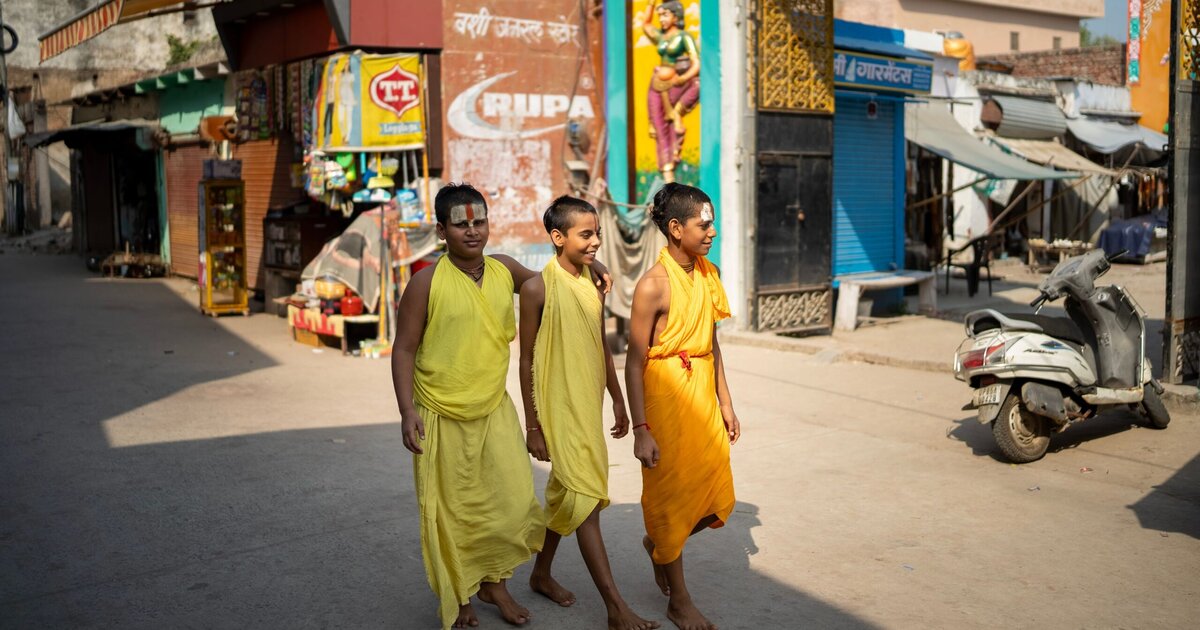
Common Travel Mistakes in Naimisharanya , is one of India’s most spiritually significant and most genuinely undervisited pilgrimage destinations — the sacred forest where 88,000 rishis gathered, where the Puranas were narrated for the first time, and where the Chakra Tirth kund has been receiving pilgrims for thousands of years.
Unlike Varanasi or Ayodhya, Naimisharanya has no mass tourism infrastructure to cushion first-time visitors from avoidable mistakes. No multilingual signboards. No tourist information kiosks. Very limited English-speaking guides. The mistakes that pilgrims make here are different from the ones they make in more famous cities — and they are almost entirely preventable with the right preparation. This guide covers every one of them.
Common Travel Mistakes in Naimisharanya

Mistake 1: Arriving Too Late in the Morning
This is the single most consequential mistake any Naimisharanya visitor makes. The early departure is essential — Naimisharanya’s temples are most serene and spiritually alive in the morning hours, and the Chakra Tirth kund is best visited before the afternoon crowds arrive.
Pilgrims who depart Lucknow at 9 or 10 AM arrive at Naimisharanya between 11:30 AM and noon — precisely when the heat peaks, the crowds are heaviest, and the morning aarti atmosphere has already passed. The Chakra Tirth holy dip at noon is a very different experience from the same dip at 8:30 AM. Depart by 7:00 AM without exception — your Tripcosmos cab is ready at your hotel at this hour, and the entire sacred circuit is achievable before the afternoon shift in atmosphere.
Mistake 2: Not Carrying Cash in Small Denominations
Naimisharanya’s prasad stalls, dhaba restaurants, flower and offering vendors, and local auto-rickshaws operate entirely on cash — and none of them have change for ₹500 notes.
The same small-denomination problem that affects Varanasi affects Naimisharanya even more acutely because the overall cash economy here is smaller and less liquid. Carry ₹10, ₹20, ₹50, and ₹100 notes in sufficient quantity before entering the sacred complex. Budget ₹800–₀1,200 per person for the full day — covering prasad (₹100–₀200), dhaba lunch (₹100–₀200), donations at each temple (₹200–₀500), and local incidentals. UPI works at very few establishments inside Naimisharanya — do not rely on digital payments for any ghat-side or temple-precinct expense.
Mistake 3: Accepting Unsolicited Puja Services
Naimisharanya shares this challenge with every major pilgrimage site in North India. Individuals dressed as priests approach pilgrims near Chakra Tirth and other major sites, offering to perform pujas before any agreement has been reached on service or cost. Once the ritual has begun — a tilak placed on your forehead, a thread tied on your wrist, a prayer chanted over you — extracting yourself without paying becomes socially and practically difficult.
Politely decline all unsolicited puja approaches with a firm, brief “Nahi chahiye” repeated as necessary. If you want a proper puja at Chakra Tirth, Lalita Devi Temple, or Dadhichi Kund — pre-arrange it through Tripcosmos before arrival. Fix the price clearly before starting any ritual. This one step eliminates the most commonly reported frustration among first-time Naimisharanya visitors.
Mistake 4: Underestimating Distances Between Sites
Naimisharanya’s major sacred sites — Chakra Tirth, Lalita Devi Temple, Vyasa Gaddi, Dadhichi Kund, Sut Gaddi, Hanuman Garhi, and Misrikh Ghat — are not clustered within a single compact precinct. Misrikh Ghat alone sits approximately 3 kilometres from the main Chakra Tirth complex. Pandav Kila is a separate drive. Visitors who assume they can walk between all sites quickly end up either rushing through the most important stops or missing the outer circuit entirely.
A pre-arranged private cab from Tripcosmos manages all inter-site transitions efficiently — your driver knows the sequence, knows the approach roads, and knows which sites require vehicle access rather than walking. The Naimisharanya Family Tour from Tripcosmos builds driving time between sites into the itinerary precisely to prevent this mistake.
Mistake 5: Wearing Inappropriate Clothing
Every major site in Naimisharanya — Chakra Tirth, Lalita Devi Temple, Dadhichi Kund — requires covered shoulders and covered knees without exception. This is a sacred forest that has been a centre of Hindu religious practice for thousands of years — it expects and deserves the same dress code respect as any major temple in Varanasi or Ayodhya.
Visitors arriving in shorts, sleeveless tops, or revealing clothing are turned away at temple entries or face uncomfortable friction at the ghat. Additionally, for the Chakra Tirth holy dip — one of the most important ritual experiences at Naimisharanya — carry a change of clothes and a small towel. Most pilgrims forget this and either skip the dip or manage awkwardly with wet clothes for the remainder of the day.
Mistake 6: Not Briefing Children Before the Visit
Naimisharanya is unusually child-friendly as a pilgrimage destination — the mythology of the sacred forest, the story of Dadhichi’s sacrifice, the 88,000 rishis’ yajna, and the concept of Lord Vishnu’s Sudarshana Chakra creating the Chakra Tirth are all vivid, story-rich narratives that children engage with immediately when given context. Parents who arrive without briefing children find their kids bored and restless within thirty minutes. Parents who spend ten minutes in the cab explaining the mythology before arrival find their children genuinely curious, asking questions at every stop, and remembering the visit years later. Your Tripcosmos guide supplements this with age-appropriate narration at each site — another strong reason to travel with a guide rather than independently.
Mistake 7: Skipping the Sacred Forest Walk
The circumambulatory walk through Naimisharanya’s sacred forest — the Van Pradakshina — is one of the most meditative and spiritually significant experiences available at this site, and most day-trippers skip it entirely because no one told them it existed. The forest is genuinely beautiful — ancient trees, birdsong, a quality of silence that pilgrimage cities can never offer. For visitors staying overnight, a dawn forest walk at 5:30 AM is the single most powerful experience Naimisharanya offers. For day visitors, a 30-minute walk through the forest periphery near Chakra Tirth before the main circuit begins is entirely achievable and genuinely worth building into the schedule.
Plan Your Naimisharanya Trip with Tripcosmos
Tripcosmos designs both one-day and two-day Naimisharanya experiences with every one of these mistakes pre-empted — early morning departure, pre-arranged guide, confirmed puja coordination, child-appropriate narration, and inter-site vehicle management all built in. From the A Day in Naimisharanya itinerary to the complete Naimisharanya Family Tour with Cost — every format includes honest pricing and 24/7 WhatsApp support.
Website: https://tripcosmos.co WhatsApp: +91 9336116210
Naimisharanya’s mistakes are preventable, not inevitable. Depart early, carry small-denomination cash, decline unsolicited pujas, respect the dress code, understand the distances, brief your children, and do not skip the forest walk. These seven adjustments transform a potentially frustrating first visit into a genuinely extraordinary one. The sacred forest that received 88,000 rishis for the world’s most important yajna is waiting — arrive prepared and it will give you exactly what it gave them. For historical context, the Wikipedia article on Naimisharanya is worth reading before your visit.
FAQ Section
Q1: What is the biggest mistake pilgrims make in Naimisharanya?
Arriving too late in the morning is the single most consequential mistake. Chakra Tirth and the major temples are most spiritually powerful and least crowded between 8:00 and 11:00 AM. Always depart Lucknow by 7:00 AM — Tripcosmos cabs are ready at this hour specifically to protect the morning window.
Q2: Is cash necessary in Naimisharanya?
Yes — completely. Prasad stalls, dhaba restaurants, flower vendors, ghat-side services, and local autos operate entirely on cash. UPI works at very few establishments. Carry ₹800–₀1,200 per person in small denominations — ₹10, ₹20, ₹50, and ₹100 notes. Do not rely on large-denomination notes or digital payments for any ghat-side expense.
Q3: How do I avoid unsolicited puja demands at Naimisharanya?
Decline all unsolicited puja approaches firmly with “Nahi chahiye” before any ritual contact is made. Pre-arrange any puja you want through Tripcosmos before arrival — confirming service, priest, and cost in advance. Fix the price clearly before starting any ritual at any site.
Q4: Should children be briefed before visiting Naimisharanya?
Absolutely — ten minutes of mythology briefing in the cab before arrival transforms children’s engagement completely. The stories of Dadhichi’s sacrifice, the 88,000 rishis’ yajna, and Vishnu’s Sudarshana Chakra are vivid and child-friendly narratives. Tripcosmos guides supplement with age-appropriate narration at every site.
Q5: Can Tripcosmos help avoid these mistakes on a Naimisharanya visit?
Yes — every Tripcosmos Naimisharanya package pre-empts all seven mistakes in this guide. Early departure, pre-confirmed guide, puja coordination, child narration, inter-site vehicle management, and dress code briefing are all built into every package format. WhatsApp +91 9336116210 with your travel dates and group size for a complete plan within 60 minutes.



Comments are closed.